Inclusive Playground Design: Building Play for All
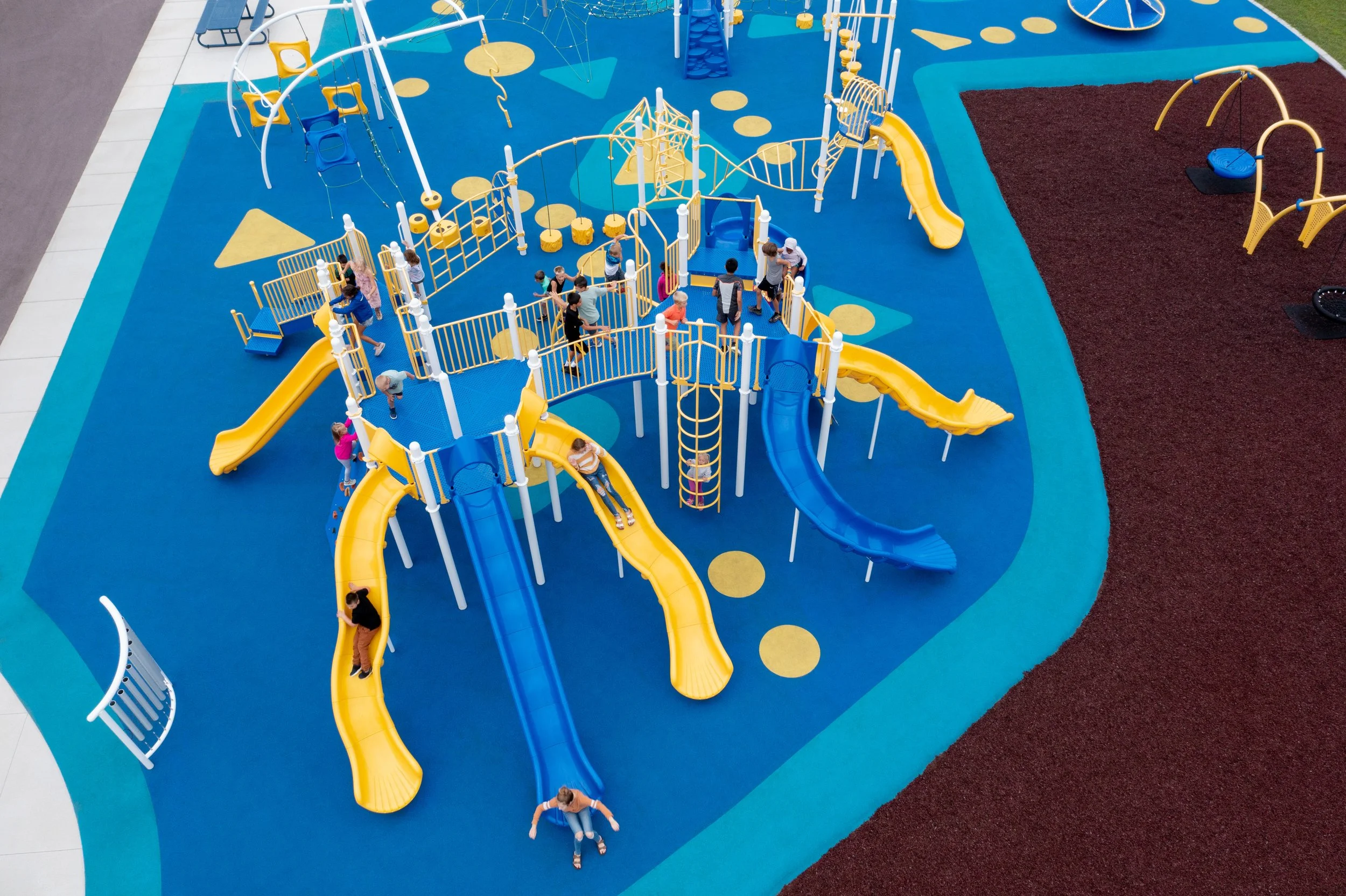
On any busy summer afternoon, watch a playground long enough and you will see it. One child sits on the sidelines, watching instead of playing. Maybe they use a wheelchair, are sensitive to loud environments, or simply cannot access the equipment everyone else is climbing on.
That quiet moment of exclusion is exactly what inclusive playground design exists to solve. Inclusive playground design goes beyond minimum requirements. It is about creating accessible playgrounds and inclusive play spaces where children of all abilities, ages, and sensory needs can play together, not apart. As Andrew Pudwill, President of Midwest Playscapes, often says, “Inclusive design isn’t optional. It is the standard for how we think about every project.”
Drawing on decades of experience across the Upper Midwest, Midwest Playscapes helps communities transform good intentions into inclusive playgrounds that work in the real world.
Why Inclusive Design Matters
Inclusive playground design goes beyond checking an ADA box or adding a ramp at the last minute. It asks a broader question: how do we create accessible playgrounds where every child and every caregiver can actively participate, regardless of ability, age, or sensory needs?
That means thinking about children with mobility devices, autism, sensory processing differences, hearing or vision loss, and kids who have experienced trauma, along with the adults who support them.
Pudwill notes that roughly half of all playground users are adults—parents, grandparents, therapists, and staff—so routes, seating, and supervision must work for them too. When communities design this way from the start, playgrounds become powerful tools for equity, connection, and social-emotional growth.

Principles of Inclusive Playground Design
Equitable Opportunities
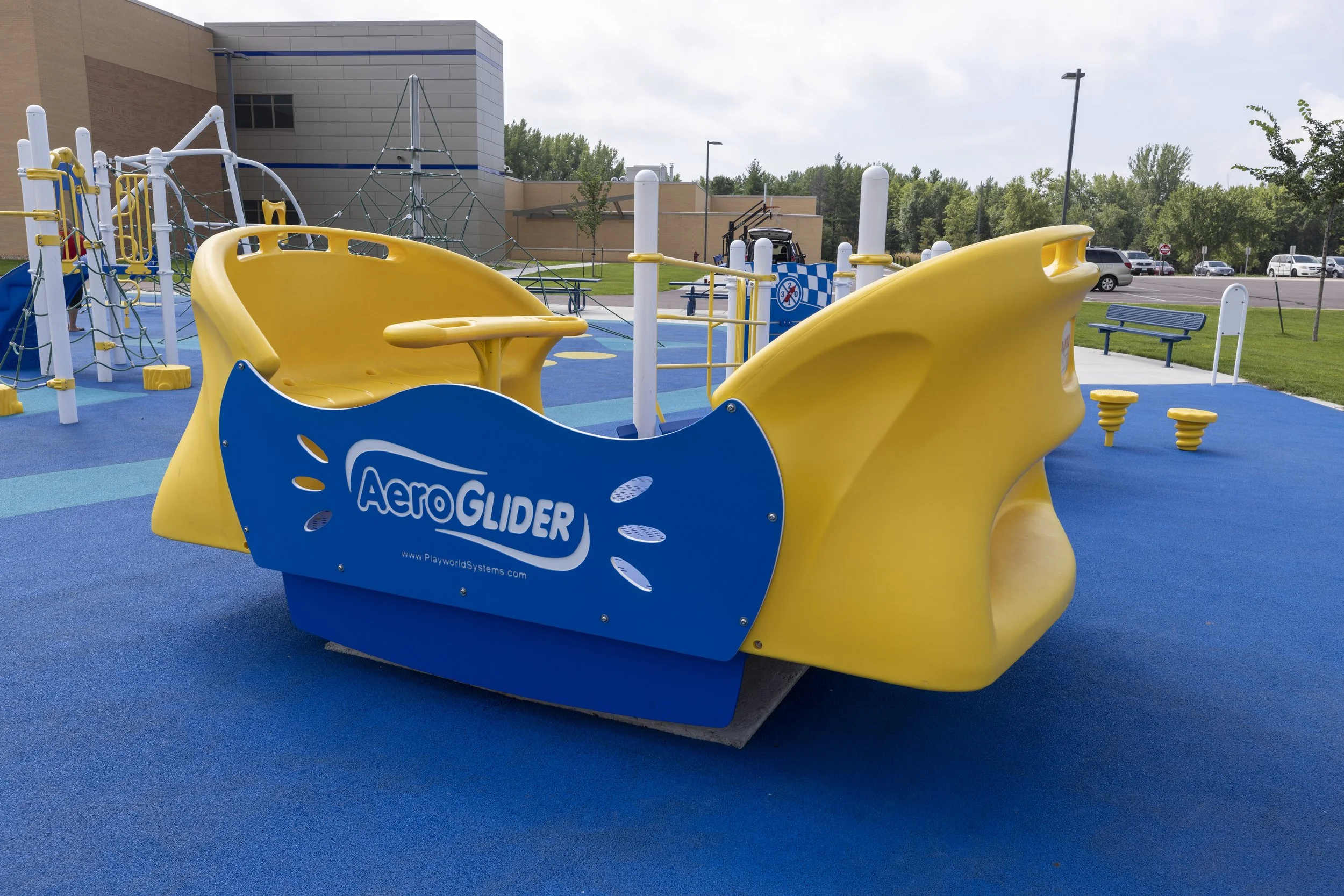
An inclusive playground gives every child meaningful ways to play, not a separate “special needs” corner off to the side. At Turtle Island Playground in Beloit, Wisconsin, children using mobility devices can join peers on an accessible merry-go-round, interactive sensory boards, and a turtle-themed swing without being segregated from the main action. Ground-level play features like music panels, sand play, and tactile sculptures are intentionally placed where social play naturally happens.
Flexible Access
True inclusive playground design is about systems, not just ramps. Pudwill points out that you can spend most of a budget on ramping and still offer very little play value. Midwest Playscapes blends accessible routes, transfer platforms, and selective ramping with smart grading and site design so users can reach key activities without ramps swallowing the entire footprint. At Riverview Park in Marshalltown, Iowa, sloped sidewalks double as accessible approaches, reducing the need for long, space-hungry ramps while still providing access to elevated fun.
Simple and Intuitive
Play spaces should be easy to understand for kids and adults with diverse cognitive and sensory needs. Clear sightlines, communication boards with pictograms and Braille, and intuitive layouts help nonverbal children express what they want to do—“slide,” “swing,” or “snack”—with a simple point. Wayfinding paths gently connect each play area, helping kids who prefer structure—like many on the autism spectrum—move confidently through the space without feeling overwhelmed.
Accessible Routes and Maneuverability
Wide circulation routes, generous turning spaces, and thoughtful placement of activities let wheelchair users and caregivers move freely, pass one another, and get close enough to assist. Midwest Playscapes often combines poured-in-place or turf unitary surfacing along primary routes with other surfacing in low-traffic zones to balance budget and function. As Pudwill explains, wood chips may meet the letter of accessibility, but they rarely meet the spirit if a wheelchair bogs down before reaching the slide.
Supervision and Risk Balance
Inclusive playgrounds must support safe risk-taking without hidden hazards. Certified Playground Safety Inspectors on the Midwest Playscapes team audit new installs to eliminate dangerous conditions while preserving healthy challenge—like tall climbers with proper fall zones instead of low, overly “safe” structures that bore older kids. Clear supervision points, fencing for elopement risk, and controlled access points are especially important for children who may wander or have limited safety awareness.
Diverse and Graduated Challenges
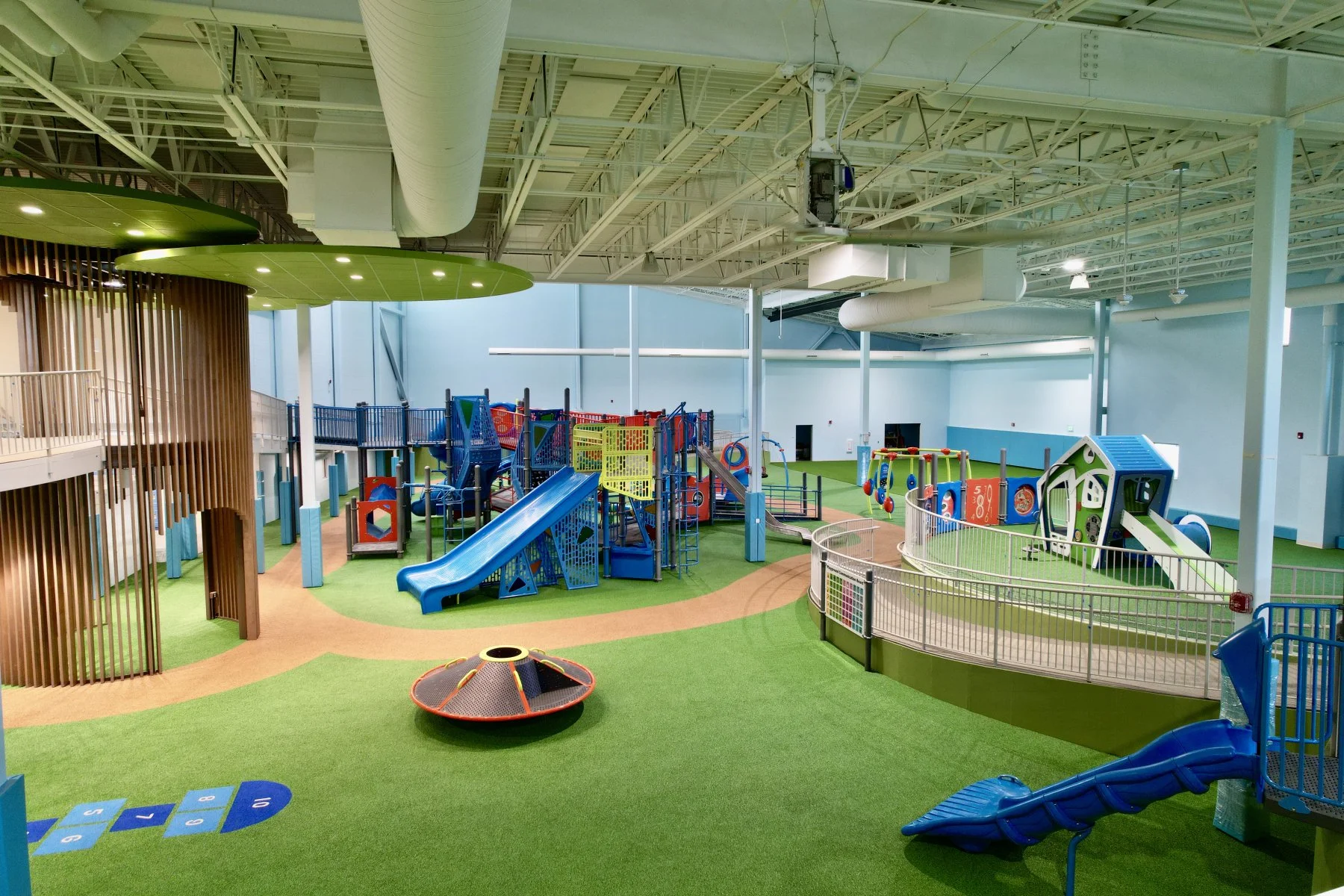
From toddlers to teens, every visitor should find something that feels “just-right hard.” Midwest Playscapes layers graduated difficulty into features like climbing walls with easier and more advanced faces, spinners and gliders that support wheelchairs, and both traditional and sensory-rich swings. At Boundless Play in Rochester, Minnesota—the Midwest’s largest indoor inclusive playground—kids speed down stainless-steel slides (friendly to cochlear implants), tackle multi-level structures, and engage in an electronic Playworld NEOS game that encourages movement, memory, and cooperation for users with and without mobility devices.
Engaging the Whole Child
Inclusive playground design recognizes that not every child seeks the same kind of stimulation. Music instruments, tactile panels, and gentle motion elements support kids who crave input, while cozy nooks, shaded seating, and quiet corners give others a chance to reset. Midwest Playscapes frequently integrates shade structures, nature-inspired elements, and trauma-informed color palettes to create an environment that feels welcoming rather than overwhelming.
Midwest Playscapes’ Proven Approach
For Midwest Playscapes, inclusive playground design starts long before any equipment is ordered. Our team is typically brought in early as subject-matter experts, collaborating with landscape architects, city staff, schools, and nonprofit partners to clarify goals, user profiles, and budget.
We lean on a deep bench of CPSI-certified professionals and manufacturer-trained designers in inclusive, nature-based, and trauma-informed design to translate those goals into 3D CAD concepts that balance universal play design with site realities such as soil, grade, and square footage.
Family-owned since 1991 and serving Minnesota, Wisconsin, Iowa, North Dakota, and South Dakota, Midwest Playscapes has delivered standout inclusive play spaces, such as Boundless Play in Rochester and Turtle Island in Beloit, as well as nature-rich projects in communities like Lake Elmo, MN, Windom, MN, and Marshalltown, IA.
Our role doesn’t end at design, either. From value engineering and surfacing strategies to final installation, audits, and staff training, we stay involved to ensure the finished playground truly works for the people who will use it every day. As Pudwill puts it, “Play is powerful—when you design for everyone, you change what’s possible for a whole community.”

Next Steps Toward Inclusive Play
In 2026, communities across the country are tapping new federal and state funding streams, including grants targeted at inclusive recreation and mental health-supportive spaces. That makes now an ideal time to rethink aging equipment and underperforming parks.
Wondering how to turn your blank site—or outdated playground—into an inclusive play space that welcomes every neighbor? Midwest Playscapes can help you align vision, funding, and design so your project becomes a long-term community asset rather than a short-term fix.
Ready to talk about your next inclusive playground project or bring an inclusive design lunch-and-learn to your team? Explore Midwest Playscapes’ full range of services, then connect with our team via our Contact Page or Schedule A Free Lunch & Learn Session.
FAQs
Q: What is Inclusive Playground Design?
A: Inclusive playground design is a planning and design approach that ensures playgrounds work for people of all ages and abilities. It integrates accessible routes, sensory-rich equipment, and social play opportunities so children using wheelchairs, walkers, or communication devices can play alongside their peers, not apart from them. Midwest Playscapes uses this philosophy on every project, from neighborhood parks to destination indoor play spaces.
Q: Why is Inclusive Playground Design important for communities?
A: When communities invest in inclusive playground design, they send a clear message that every child and caregiver belongs. Families stay longer, visit more often, and build relationships across age and ability lines. Inclusive play spaces also support therapists, schools, and nonprofits who need environments where kids can work on motor, social, and sensory goals in a natural setting. For municipal leaders, these playgrounds become visible proof of equity commitments—and a powerful way to attract new residents and grants.
Q: What are the key principles of Inclusive Playground Design?
A: Key principles include equitable opportunities for all users, flexible access beyond just ramps, intuitive layouts, independent maneuverability, strong safety and supervision, diverse levels of physical challenge, and a rich mix of sensory experiences. Midwest Playscapes integrates these principles into features such as accessible merry-go-rounds, musical equipment, quiet nooks, stainless-steel slides for children with cochlear implants, and shade for users who struggle with heat. Together, these choices transform basic ADA playgrounds into truly inclusive play spaces.
Q: How much does Inclusive Playground Design cost?
A: Costs for inclusive playground design vary widely based on site size, equipment mix, surfacing, and whether the project is indoor or outdoor. While inclusive features like unitary surfacing or electronic play systems can increase upfront investment, strategic design often stretches budgets further than a ramp-only approach. Midwest Playscapes helps clients phase projects, blend surfacing types, and leverage grants and community fundraising to keep inclusive playgrounds financially realistic for parks, schools, and nonprofits.
Q: How can Midwest Playscapes help with my Inclusive Playground project?
A: Midwest Playscapes can support you from the first idea through opening day. Their team provides early-stage visioning, site assessments, and 3D concepts tailored to inclusive playground design goals. They coordinate with landscape architects and city staff, source sensory and accessible equipment from multiple manufacturers, and oversee CPSI-informed installation and audits. Whether you are upgrading a neighborhood park or planning a signature destination like Boundless Play, Midwest Playscapes can guide you toward a safe, engaging, and truly inclusive play space for your community.