Sustainability & Site-Responsive Design: Building Play That Belongs
Picture two playgrounds. One is a standard "catalog" layout dropped onto a perfectly flat pad. It is perfectly fine, but it could be anywhere. The other weaves between existing trees, tucks a slide into a hillside, and follows the way people naturally move across the park. That second space is what sustainable playground design looks like when you design with the site, not against it.
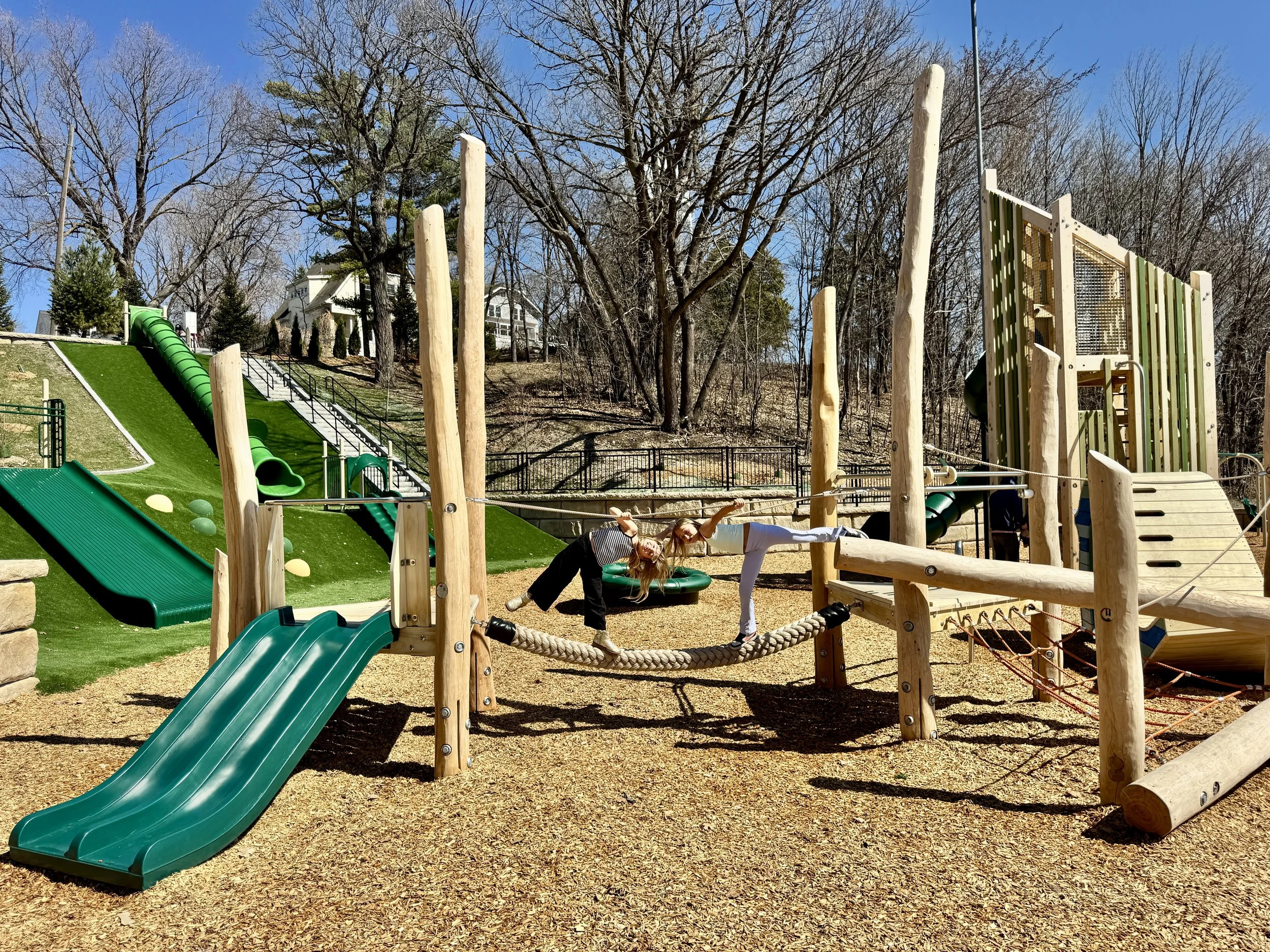

At Midwest Playscapes, every site in the Upper Midwest is treated as a set of opportunities: sun, shade, slopes, soils, and circulation patterns waiting to be translated into play. The goal is simple: take the best parts of a site and make the most of them, rather than flattening everything and starting over.
Why Designing With the Site Matters
Site-responsive design starts with paying attention. On that first walk, the team looks at who will use the park, where people will park and enter, how they will watch their kids, and what hazards might be nearby, such as busy streets, open water, or utilities. They also scan for existing shade, especially for younger children who are more sensitive to heat on hot slides and surfacing. Medium, well-draining soils and healthy trees often signal a strong starting point.
In the Upper Midwest, climate is a major factor in sustainable playground design. Freeze-thaw cycles can push footings out of the ground if they are not set below frost depth, and loose-fill surfacing, such as wood mulch, can freeze solid and lose its ability to cushion falls. Designing with the site means planning for these realities up front, orienting equipment to manage sun and wind, grading for drainage, and choosing surfacing and footings that will hold up through decades of winters. That is how you protect both your investment and your maintenance crew.
Natural Play That Feels Native to the Land
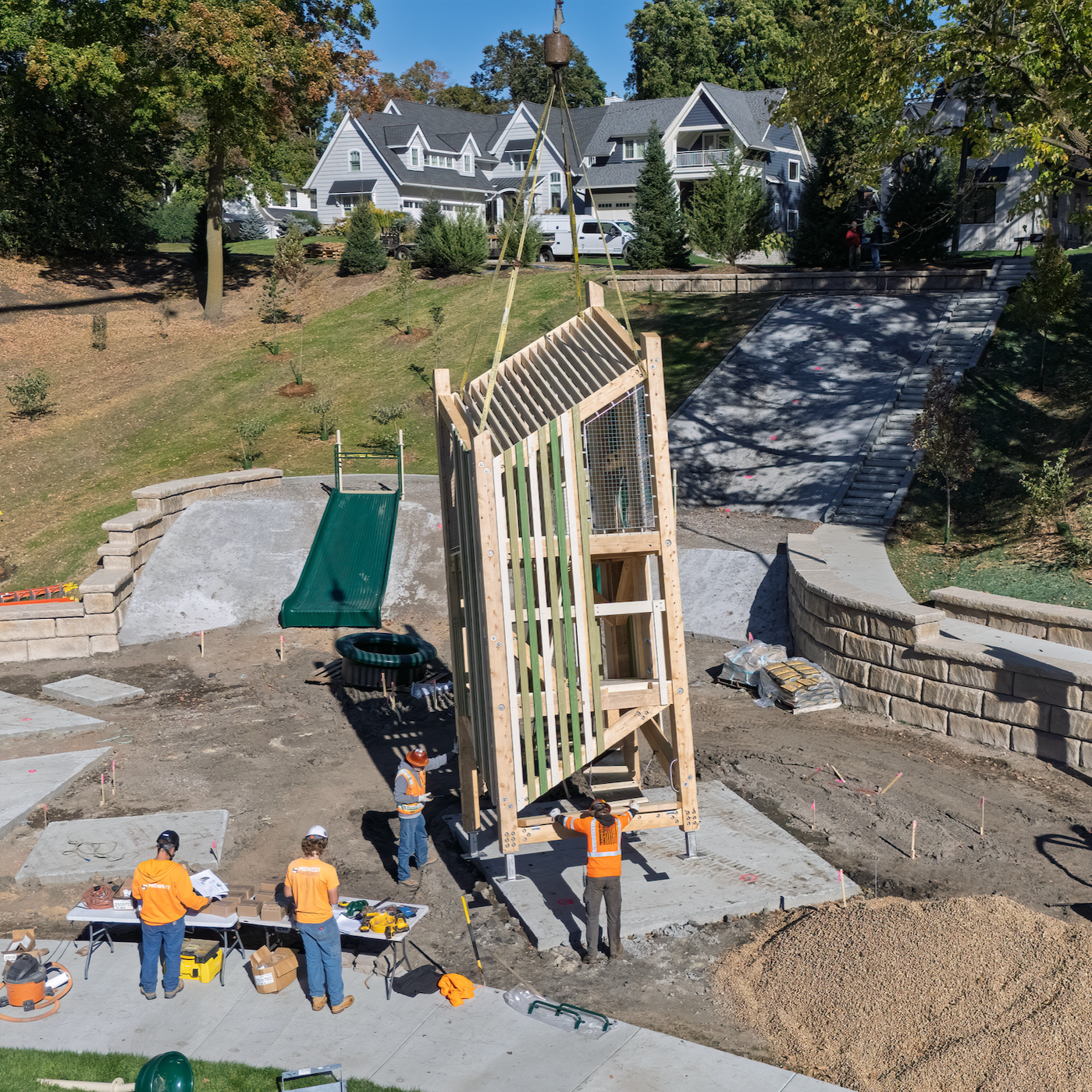
When we talk about natural play spaces, we are not just talking about adding a log or two. For Midwest Playscapes, natural play means using real materials such as different species of wood, native boulders, and even storm-felled trees from the site itself as borders, climbers, and seating. These choices create nature-inspired playgrounds that feel like they grew out of the park instead of being shipped in on a truck.
The benefits go beyond looks. Wood is a natural thermal insulator, so it stays more comfortable to the touch in both summer heat and winter cold than steel or plastic. Rock, wood, and plantings also give kids richer tactile feedback than smooth plastics. Our natural attraction to these environments, often called biophilia, helps children and adults relax, explore, and spend more time in these spaces.
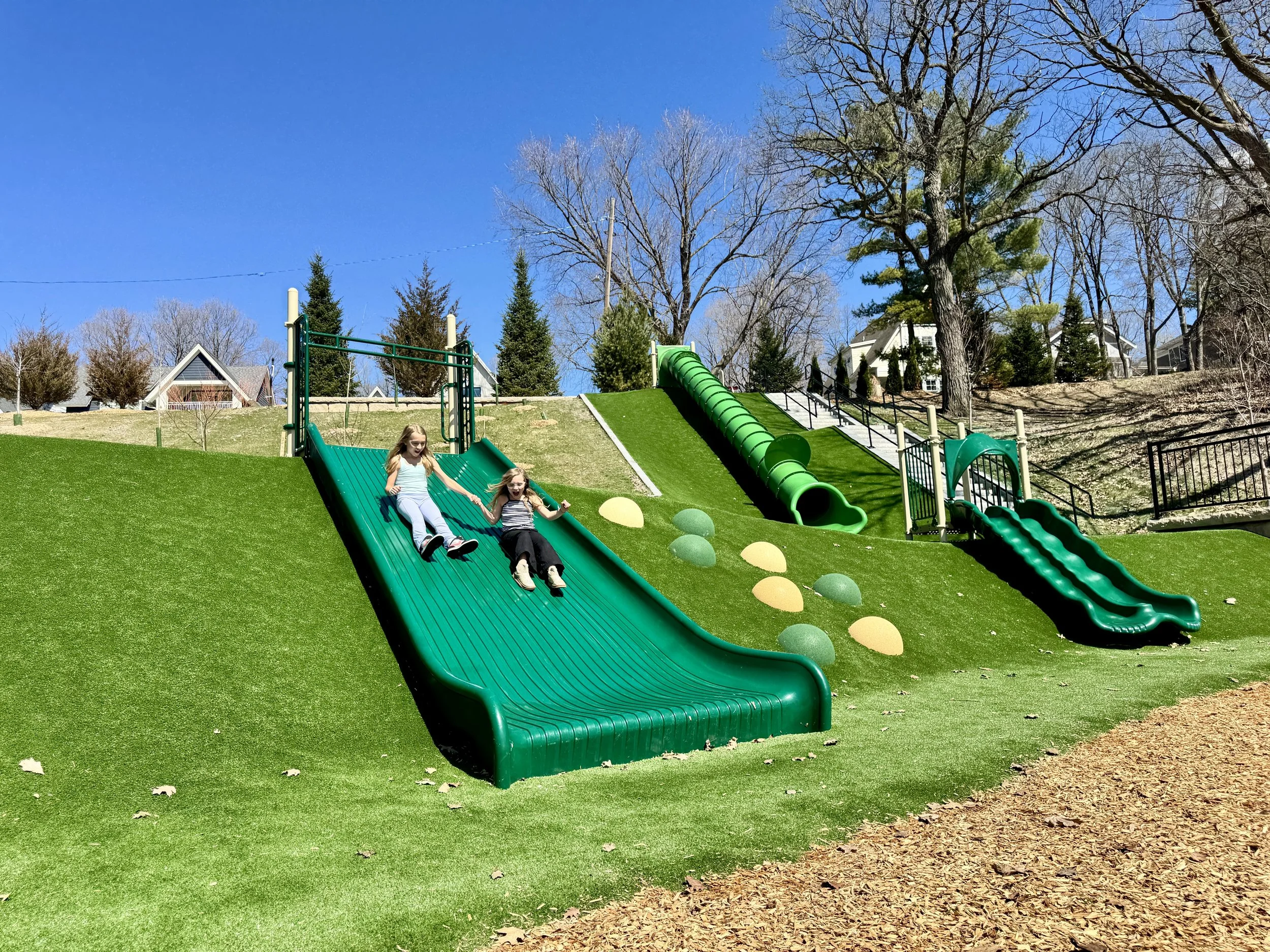
At Klapprich Park in Wayzata, MN, for example, a steep back hill could have been a design problem. Instead, the team used it for embankment play by installing slides into the slope so kids can scramble up and glide down while caregivers watch from level ground. The grade does the work, which means less structural steel, less cut-and-fill, and a play experience that truly belongs to that specific park.
Choosing Materials for Longevity and Lower Impact
Material selection is where eco-friendly playground materials meet real-world performance. Designers consider four key factors: durability in the local climate, maintenance needs and costs, environmental footprint, and how it feels for kids and caregivers to use.
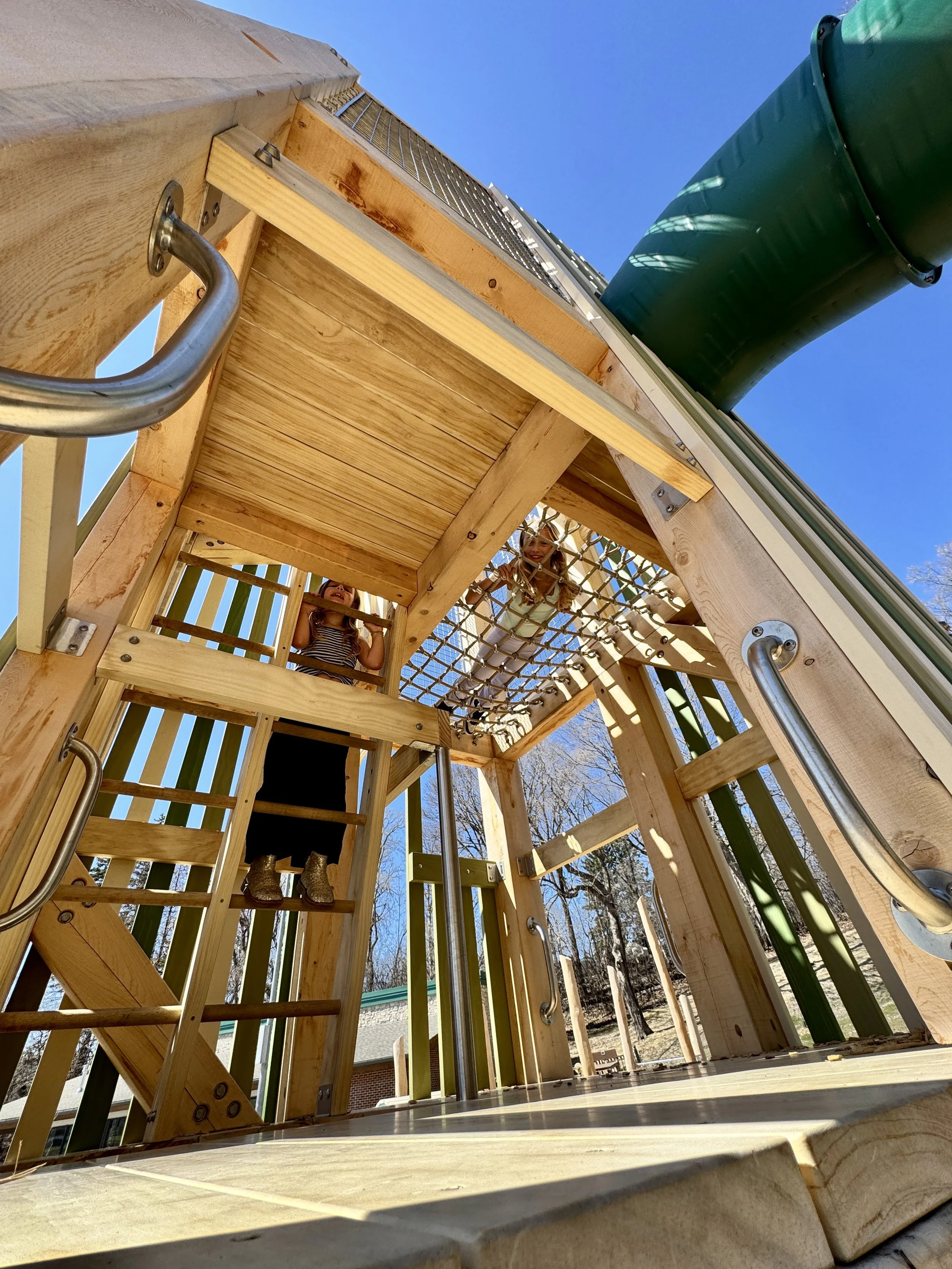
On the manufacturing side, many equipment partners carry certifications such as Cradle to Cradle, ISO 14001, and LEED, which evaluate how materials are sourced, produced, and eventually recycled. For natural materials playgrounds, certifications such as the Forest Stewardship Council (FSC) and Rainforest Alliance help ensure forests are harvested and replanted responsibly.
That means when Midwest Playscapes specifies equipment from trusted partners, the sustainability story includes not only the visible structures in the park but also the invisible work happening in the factory: recycled content in metals and plastics, safer coatings, and reduced environmental impact during production.
The lifespan of natural materials playgrounds is usually comparable to that of steel and plastic installations, at roughly 20 to 25 years. That means you can specify more wood and stone without automatically sacrificing long-term playground performance. Often, the best answer is a thoughtful mix: wood gliders and climbing logs paired with steel posts, or native boulders alongside manufactured nets and spinners.
Surfacing is another major decision. Wood mulch has a lower upfront cost but requires topping off every other year and full replacement every 5 to 7 years. Turf and poured-in-place rubber have higher initial price tags but can last around 15 years with far fewer material deliveries and site disruptions. Midwest Playscapes often prepares 20-year maintenance pro formas comparing turf, wood mulch, and rubber mulch so clients can see the full life cycle picture rather than just the lowest bid.
Smart Grading, Stormwater, and Site Constraints
Sustainable playground design prioritizes safety and accessibility by working with gravity and water. Thoughtful grading directs stormwater away from play zones, while gentle slopes and bioswales help manage runoff and keep surfacing in place. In some projects, sidewalks are graded to double as accessible routes to higher play levels, reducing the need for long, expensive ramps.
Not every site is straightforward. Midwest Playscapes has experience transforming challenging locations, such as former brownfields or swampy soils, by collaborating with civil engineers and customizing solutions specific to each unique condition. Soil borings, carefully designed footings, and corrective fill help ensure durable, site-responsive playgrounds even on tricky ground.
These site-responsive decisions often reduce long-term headaches. Footings designed below the frost line resist heaving, well-planned drainage prevents surfacing from washing out, and realistic use of slopes means fewer retaining walls and more playable terrain. The aim is to avoid heavy-handed site redevelopment whenever possible and instead let the land do some of the heavy lifting.
From Big Idea to Built Project
For Midwest Playscapes, sustainability and site responsiveness are built into the process from day one. A typical project starts with clarifying who will use the playground, including ages, abilities, and community context, and what the client's vision is, whether that is nature play, rope-heavy adventure, or a blended design. Then come site measurements using tools such as three-dimensional digital mapping, drone photography, and on-the-ground observation of traffic flow and access points.

From there, designers develop three-dimensional concepts that respond to the site's actual grades, tree cover, and constraints, collaborating closely with landscape architects and, when needed, civil engineers. Budget and surfacing options are refined alongside long-term maintenance projections, so decision-makers can see how choices today will play out over the next 15 to 20 years. Certified Playground Safety Inspectors (CPSIs) review the plans and installations to ensure safety and compliance are not sacrificed for aesthetics.
Looking ahead, the team is watching emerging materials such as cork-based unitary surfacing and integrated lighting and electronics with cautious optimism. The guiding question remains the same: Does this help create site-responsive, sustainable playgrounds that genuinely serve kids, caregivers, and communities over the long haul?
When you design play spaces that truly belong to their land and neighbors, you do not just get a nicer park; you get a resilient community asset that feels right on day one and still makes sense 20 years later. If you are ready to explore what sustainable, site-responsive design could look like at your school, park, or nonprofit in Minnesota, Wisconsin, Iowa, or the Dakotas, Midwest Playscapes would love to walk the site with you. Reach out to schedule a concept review or a lunch-and-learn, and start designing play that works with your site, not against it.
FAQs
What is sustainable playground design?
Sustainable playground design is an approach that considers the full life cycle of a play space, from how materials are sourced to how the site performs 20 years from now. It focuses on durable, low-impact materials, smart grading and drainage, and layouts that work with existing trees, slopes, and soils instead of fighting them. The result is a playground that is safer, easier to maintain, and better for both the environment and the community budget.
What does site-responsive design mean for a playground project?
Site-responsive design means the playground is shaped by the land itself rather than forcing a generic layout onto a flat pad. Designers study sun and shade patterns, wind, topography, soil conditions, access routes, and views to decide where to place equipment, paths, and seating. This leads to play spaces that feel "locked in" to their setting, with better comfort, safety, and long-term performance than one-size-fits-all solutions.
How do natural play spaces support kids and caregivers?
Natural play spaces use real materials like wood, stone, plants, and topography to create richer sensory and social experiences. Wood stays more comfortable in hot and cold weather, rocks and plantings offer varied textures, and hillsides or berms invite climbing, sliding, and imaginative play. Caregivers benefit too, with cooler, more comfortable environments and spaces that feel welcoming for longer visits.
Are eco-friendly playground materials more expensive to maintain?
Eco-friendly playground materials are not automatically more expensive to maintain. For example, natural materials like wood can have lifespans similar to those of steel and plastic when designed and detailed correctly. Surface choices have the biggest impact on maintenance costs over time: loose-fill options like wood mulch cost less up front but require regular top-offs and full replacement, while turf or poured-in-place rubber cost more initially but can reduce long-term labor and material needs.